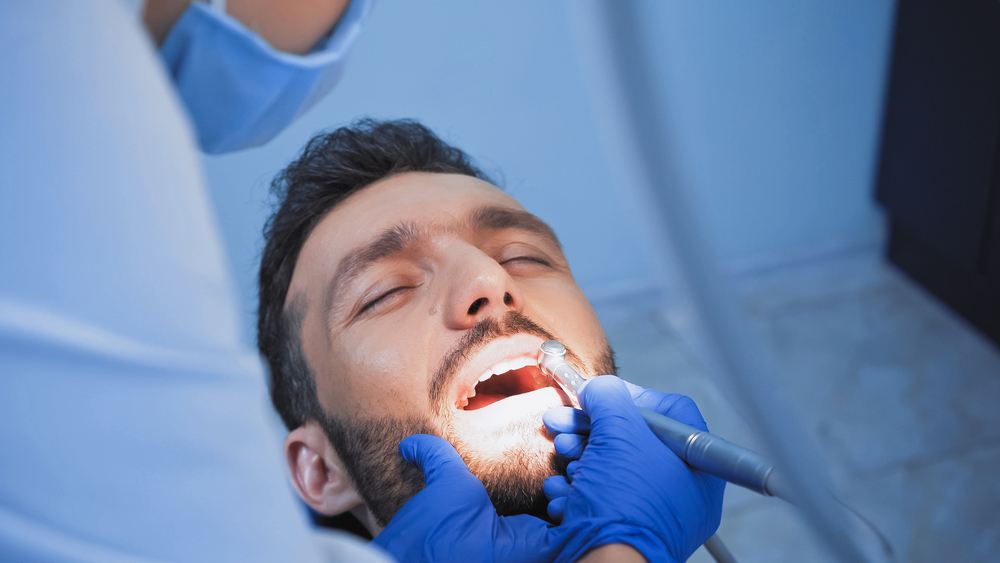


If you’ve cracked a tooth or been told a filling won’t be enough to fix the problem, your dentist probably mentioned something called a dental crown. But what exactly is a dental crown?
It’s a custom-made cap that covers an existing tooth to restore its shape, strength, function and appearance. [1] Think of it like a protective shell that fits over what’s left of your original tooth. Crowns are used to protect a weak or broken tooth, restore a tooth that’s been badly worn or decayed, cover a tooth after a root canal or improve the aesthetics of a damaged tooth. [1]
If you’re considering a crown or just want to learn about your options, the best place to start is by having a conversation with your dentist. They can speak to your individual situation and talk you through all the pathways available to you. In the meantime, here’s what you need to know.
How do dental crowns work?
A dental crown works by fully encasing the visible part of a damaged tooth, sitting over it like a cap. Getting full coverage is what makes crowns such a popular solution – where a filling repairs a small area of damage, a crown protects and strengthens the entire tooth, holding together a structure that might otherwise crack or break under the pressure of everyday chewing. [1]
It’s why crowns are recommended when a tooth is too damaged for a simple filling but still has enough healthy structure to be saved. Covering and reinforcing the tooth means a crown can help you keep your original tooth rather than losing it to extraction. [1]
Are dental crowns permanent?
While crowns are a long-lasting, fixed restoration, they aren’t necessarily permanent. A well-made crown that’s cared for properly can last many years. But a number of things can reduce a crown’s lifespan over time. [1]
The most important thing to know is that although the crown itself can’t decay, the natural tooth underneath it still can. [1] So keeping up good oral hygiene is a must. Other factors that can influence how long a crown lasts include general wear and tear, teeth grinding, poor fit, as well as habits like chewing very hard foods or ice.
In some cases, crowns can loosen, chip, break or fall off, which is why regular dental check-ups are important for keeping an eye on both the crown and the tooth underneath it. [1]

Dental crown procedure: What to expect
A dental crown procedure usually takes one or two visits to your dentist or a dental specialist (prosthodontist). Here’s a step-by-step of what to expect: [1]
- Inspection and preparation: Your dentist looks at the tooth and might take an X-ray. If there’s decay or damage, this is treated first – and in some cases, a root canal might be necessary before the crown is fitted.
- Shaping the tooth: Your dentist reshapes the tooth so there’s enough room for the crown to fit over it. A local anaesthetic will keep you comfortable during this step.
- Taking an impression: A mould or digital scan of your prepared tooth is taken so the crown can be custom-made to match your bite and the shape of your other teeth.
- Fitting a temporary crown (if needed): If your crown is being made in a lab, you could be given a temporary crown to protect the tooth in the meantime. Some clinics can make and fit crowns on the same day.
- Fitting the final crown: Your dentist checks that the permanent crown fits well, matches your bite and looks right, then cements or bonds it into place.
Types of dental crowns: What are dental crowns made of?
Crowns can be made from a few different materials. The right choice for you will come down to which tooth needs the cap and the forces it needs to withstand. The most common types include: [1]
- Porcelain (ceramic) crowns: Great for a natural appearance, so a good choice for front, visible teeth.
- Zirconia crowns: Very strong and hard-wearing, which means they are most often used on back teeth (molars) that deal with heavy chewing.
- Gold alloy and other metal crowns: Extremely durable and long-lasting, although much less natural-looking.
- Porcelain fused to metal (PFM) crowns: Combining the strength of metal with a more tooth-like appearance.

Dental caps versus crowns
A dental cap and a dental crown are two names for exactly the same thing. [1] ‘Cap’ is just the more casual term people use to describe a crown, because a crown effectively caps the tooth. There’s no difference between the two, so if your dentist talks about a ‘crown’ and a friend mentions their ‘cap’, they’re talking about the same restoration.
Dental implants versus crowns
The big difference here comes down to whether you still have a tooth to save. A crown covers and restores an existing (damaged) tooth. A dental implant, on the other hand, replaces a missing tooth – it’s a titanium screw that’s placed into your jawbone to act as an artificial tooth root. [2]
Interestingly, the two work very well together. Once an implant has fused with the bone, a crown is usually attached on top to serve as the visible, functioning tooth. [2] So a crown restores a tooth you still have, while an implant (topped with a crown) replaces the one you’ve lost.
Dental bridges versus crowns
A dental bridge fills the gap left by one or more missing teeth, whereas a single crown restores one existing tooth. A bridge actually uses crowns as part of its design too. Crowns are placed on the healthy teeth on either side of the gap, and these are joined together by a false tooth in the middle that ‘bridges’ the space. [3]
In other words, a crown covers a single damaged tooth, while a bridge spans a gap and relies on the neighbouring teeth (crowned for support) to hold a replacement tooth in place. [3]
Dental crowns versus veneers
Both crowns and veneers can improve the look of a tooth, but they work differently in terms of coverage and their purpose. A crown covers the entire tooth and is restorative – protecting and strengthening a tooth that’s damaged, decayed or weakened. A veneer is a thin shell bonded only to the front surface of a tooth, which means it’s mainly cosmetic. [1]
Your dentist can advise which is best for your situation.

Ask your dentist if dental crowns are right for you
Dental crowns are a reliable solution for lots of situations, but they aren’t always the right answer for every tooth and every person. Whether a crown, or one of the alternatives above, is best for you depends on the condition of your tooth, your oral health, your goals and your budget. Only a dentist and you can make that final decision.
It’s also worth remembering that the best way to avoid expensive or uncomfortable procedures is to prevent problems from happening in the first place. Regular dental check-ups will help your dentist catch issues like decay and cracks early on, well before a crown or other treatments become necessary.
If you think you might need a crown or you’re due for a check-up, Healthengine makes it easy to find and book a trusted dentist. Our network connects you with quality dental providers across Australia, so you can compare availability and book an appointment that suits you – all in one place.
Book a dental appointment near you on the Healthengine app today.
References:
- https://www.healthdirect.gov.au/dental-crown-procedure
- https://www.healthdirect.gov.au/dental-implant
- https://www.healthdirect.gov.au/dental-bridge
All content and media on the HealthEngine Blog is created and published online for informational purposes only. It is not intended to be a substitute for professional medical advice and should not be relied on as health or personal advice. Always seek the guidance of your doctor or other qualified health professional with any questions you may have regarding your health or a medical condition. Never disregard the advice of a medical professional, or delay in seeking it because of something you have read on this Website. If you think you may have a medical emergency, call your doctor, go to the nearest hospital emergency department, or call the emergency services immediately.
Related Articles
Your oral health significantly affects your overall health,…

Oral hygiene is an important aspect to achieve…

Keeping your teeth and gums healthy, proper cleaning,…
Need a health appointment?
Find and book a doctor, dentist, physio and more on Healthengine
Find a practitioner